Showing posts with label Science. Show all posts

Monday, April 1

Born to Run


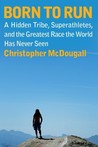
Born to Run: A Hidden Tribe, Superathletes, and the Greatest Race the World Has Never SeenBorn to Run: A Hidden Tribe, Superathletes, and the Greatest Race the World Has Never Seen by Christopher McDougall
My rating: 4 of 5 stars

Running is not something that I like doing unless I have a basketball, am running bases, or playing some sort of sport.  Having started running in the Running Room clinics a friend lent me this read.  After devouring this interesting novel about a tribe of people who run as their more used form of transportation, the Tarahumara, several well known American runners organize a race down in the Copper Canyons of Mexico.  A fantastic read that will make you think you too can run for miles and miles.  While I continue to plod along, I shall allow this read to motivate me as I learn to run for the sake of my body and its abilities.


View all my reviews

Sunday, April 15

My Sweet Curiosity


Amanda Hale
My rating: 3 of 5 stars

Once again, I found this book walking back from the bathroom to my study carrel at a University library.  Two books caught my eye, both by the same author, this one called, My Sweet Curiosity.  Blending the history of Andreas Vesalius, the author of De humani corporis fabrica (On the Structure of the Human Body), who is considered the founder of modern human anatomy; with the story Natalya, a medical student and her tumultuous relationship with her mother beginning with a bizarre birth story; and Dai Ling, a gifted cellist studying music in university with parents who sacrificed their lives in China to bring her to Canada.  Natalya and Dai Ling find each other and fall in love, and Dai Ling has to work through this revelation of being a lesbian within a traditional Chinese family structure.  Lost in tumultuous history's, each character, Natalya, Dai and Andreas, must navigate a labyrinth of ancestral choices that influences their current conditions, and reminds the reader that we come from a place we may not have chosen, but this history filled with people is desperate to hold on to us, despite our attempts to set ourselves free.

I will be looking for more Amanda Hale books as the intense research she completes on topics that I am unfamiliar with, teaches me about subjects I don't have time to research, as I turn each page.  Sounding the Blood, her first novel, is next.

http://amandahale.com/


View all my reviews


Monday, August 15

The Cult of the Amateur: How today's Internet is killing our cultureThe Cult of the Amateur: How today's Internet is killing our culture by Andrew Keen
My rating: 3 of 5 stars

While a good read the premise of the book concerned me. Essentially the author is concerned that the growing voice of alternative and amateur voices, as opposed to well-trained professional voices, are increasing in volume and opinion on the Internet, sending Western culture into a downward spiral of less knowledge and fact based reasoning. While there is merit in this argument, one of the most interesting parts of the Internet is the multiplicity of varying voices on it and the idea that it was first a place where marginalized, dissenting and alternative voices found a space to be heard. These voices need to be heard as professional voices have often had easier access and better access to education, employment and spaces that train then deem them professional voices, while others have not. Which of these voices is therefore more important? Those who have had priveledge, thise who face added struggles with access, or bot? This author would rather see the amateur voice less audible on the Internet. I disagree. Is needs to remain an open access space for all people to contribute even the nutters out there.

View all my reviews

Wednesday, July 27

The Holy Grail

Doing research for my thesis.
Found this in the footnotes of an article on blogging.
The Holy Grail of Blogging
One of the original blogs.
Where is began.
Simple.
Crude.
Partly unintelligible to the non-programming eye.
Cooooooool.

Robot Wisdom
by Jorn Barger
(www.robotwisdom.com, if link does not work)

Today's lesson?
Read the footnotes.
Always read the footnotes.
Then follow the links.

rebecca's pocket
by Rebecca Blood
(www.rebeccablood.net, if link does not work)

Another original.
Blogging since 1999.
Wasn't there a song, blogging like it's 1999.....

Tuesday, March 1

Obesity Stigma

Here is the social follow-up to my previous BMI Rant.

One of the classes I am currently taking requires us to find, read, summarize and pose questions based on an article based for that week's topic.  This week the topic is Leisure Constraints for which I found the following article and my summary.  It is long but really, really good and will remind us all that prejudice in any for is completely and absolutely unacceptable:


Obesity-Stigma as a Multifacted Constraint to Leisure 

The word obesity has been mentioned increasingly in health research, physical education, recreation, leisure, and the media over the recent decade.  Most of the researches in these areas measure obesity by using one measure, the Body Mass Index (BMI).  (It was recently altered by the NIH in the United States to line up with the WHO international guidelines, which moved 25 million Americans from the normal weight range into the overweight range, and moved people 12.5 million American from the overweight category to the obese category.)  This shift in size levels of individuals and an increase of a sedentary lifestyle by many people, has been interpreted by many governments and professionals as a quick decline in health within many countries. 

 In addition, there are social and cultural anti-fat biases or obesity-stigmas that have developed parallel to the changes in health assessment.  Many professionals see these attitudes as the final form of acceptable discrimination as this very visible experience stigmatizes and marginalizes people.  Participants that demonstrate such prejudice can include family members, friends, co-workers, children, teens, young adults, adults, health and wellness professionals and the general public.  Interestingly, people in the overweight or obese categories have been studied and their biases towards other people in the same category can be as judgmental.  It is hypothesized that anti-fat bias continues to grow because unlike other marginalized groups, larger people are socially marginalized and do not form self-support groups or blame the prejudiced attitudes on the perpetrators (called self-protective properties), instead they internalize the stigmas and prejudice as their own personal flaws (called attributional ambiguity). 

This culmination of this research should have a profound effect on the leisure, recreation, physical, and kinesiology fields but the work currently in place is not effective, as there is strong psychological and self-worth component that these professions are not addressing.  These leisure constraints create a psychological cycle of feeling too big to participate in leisure, which decreases participation and the access to benefits, and lower participation keeps self-worth too low to motivate participation.  Leisure constraints for people who fit outside the 'average' size include lack of access to the correct size of exercise clothing, equipment made for shorter and smaller people, negative attitudes and demeaning judgments of individuals at recreation facilitates, and assumptions that one's participation is to lose weight rather than for other benefits.  Individuals in the recreation, health and physical activity field also carry a great deal of prejudice and judgment towards larger individuals, especially undergraduates in the kinesiology and physical education streams. 

Lewis and Van Puymbroeck suggest the following work should be completed in order to truly be effective professionals and change the socially acceptable fat-bias that is so prevalent:
1.) Reduce our individual obesity stigmas as we do our best to understand this complicated leisure constraint issue.
2.) Change our focus from appearance to overall health and wellbeing.
Look beyond traditional health models and include addressing the socially constructed attitudes in our society that create these stigmas of prejudice.
3.) If we are the gatekeepers of health and wellness, what type of accessibility (or lack thereof) are we creating?  Change the gatekeepers to change the exclusive environment.
4.) Focus on intrapersonal and interpersonal constraints as research continues.
5.) We need more qualitative and evidence-based research that integrates themes of leisure constraints.
6.) We must not assume that it is always the goal of the larger person so lose weight. 

 Lewis and Van Puymproeck summarized with this paragraph:
"With twice as many people affected by overweight than not in this country, related opportunities for both leisure researchers and practitioners abound.  Children who are overweight are often seen as undesirable playmates.  Social interactions across the lifespan are often limited due to the presence of obesity.  People who are significantly overweight not only face social judgement and discrimination in many aspects of their lives, but also discriminate against others who are overweight.  These forms of prejudice and discrimination are likely to significantly impact the leisure experience of people who are overweight across the lifespan." (p. 584)

Two last comments by the authors:
"Current interventions are not succeeding, and more research is quickly needed." (p. 585)

"We must decide the identity we wish to assume related to this current health crisis." (p. 585)


My questions for the class:
1.) If we are going to broaden our perceptions of health to include more than appearance, why are we using the BMI as the primary measure of health?  It is time to develop an improved, more accurate, increasingly helpful way to measure an individual's over-all health.   

2.) How do we balance the desire to create healthier less costly (health wise) cities, provinces and countries while decreasing the social and cultural prejudice that is so rampant?

3.) What social and personal stigmas do you have attached to your own body size and type?  Is this attitude affecting your view of others? How so?

4.) What new interventions can we develop to increase the overall health of the people who freely choose to access our services as leisure, recreation and Kinesiology professionals?  

Lewis, S. T. & Van Puymbroeck, M.  (2008).  Journal of Leisure Research, 40(4), 574-588.

Sunday, February 27

"They Are Young. They Will Heal Fast."

Several years ago a talk was posted on the TED.com website that had me laughing and saying, "yes, we should do that!"  This week I was reminded of this talk with my Aunt as she posted on a family blog a chat with her daughter and granddaughter concerning children playing with fire.  Gever Tulley was the speaker and the talk was titled: 5 Dangerous Things You Should Let Your Kids Do.  Yep.  Dat's wat eet iz!  Playin' wit fiyaaa!

He ensures that his listeners are aware that we are making larger and larger safety bubbles around each child, to the point that we stifling their creativity, ability to learn, understand how real objects work, and ability to manipulate objects with their hands and minds.  This type of childhood training reminds me of the difference between one of my siblings and I.  After dinner with family members, my brother Trent and I, when we approached what appeared to be a moving waterfall landscape picture in the restaurant, had very different reactions.  He was up close to the picture looking behind it, trying to figure out how it worked, and I was further back looking at the artistic rendering of the landscape, absorbing its beauty and interpreting its meaning.  Trent was ready to pull it apart and discover its inner guts, which Tulley suggests each parent should do with their child when appliances and other objects no longer work.  Disect them and learn together.


The most important message that Tulley suggests in addition to remembering the art of discover, is the reality that parents could be passing this work on to their children, do so with safety and supervision, have fun, and create shared meaningfulness between the scientific dissectors.  His best piece of advice if someone does accidentally sustain an injury: "Don't worry.  They are young.  They will heal fast."

Several years have passed since my initial viewing of the videocast, there is now a website and a book, both titled Fifty Dangerous Things.

Enjoy the information and get dissecting!

Saturday, January 8

RSA

The tiles on my blog have been acronyms lately.  Here is a link to an innovative way to present academic information.  Combining a professional speaker, video, and animation those individuals who are auditory and visual learners receive a double whammy of information.  Sent to me by a professor for whom I am working this term in a Philosophy of Sport and Leisure course, the message concerns human beings innate natures.  We may not always see people's actions as empathetic but do we in fact all have a propensity to be individuals who, after all that transpires as we breathe, live, interact, have a biological need to help and be part of a the group rather than the importance of the individual?  An old age question revisited below by a new organization to me who is educating in a rather unique way.


There are more videos like this one on YouTube through the organization Royal Society for the encouragement of Arts, Manufactures and Commerce (RSA).  A new favourite website and organization for me.  Enjoy! 

Wednesday, October 6

Mind Mapping with Prezi


Last week I started an MBA course in Organizational Theory and Design and the professor begin his lecture telling us that he no longer used PowerPoint.  That audiences had been slided to death and people no longer paid attention to the slides, or the presenter, or both.  He then mentioned that he used a substitute software called Prezi.  He admitted that he was a new user of the program and that his movement around the program might be slower.  "No problem," I thought, "I am just excited that I am understanding what you are saying and you have not jumped right into business technology.  Prezi away!"

The projector turned on and we saw a map of many pictures, words, speech bubbles, quotes, and wavy lines all organized in a creative pattern around the main idea, "What is Organizational Behaviour?"  The professor proceeded to slide and glide around the map, scrolling in and out of the text, shapes and pictures making them large enough to see, and referring to a specific concept on the screen only every so often.  We sat in amazement at this new program, listening to his words, asking questions, and enjoying the novel 'picture within a text, within a picture' pattern.

(Lomography Mind Map copied from fuzz2buzz Google Images.)

Monday, June 21

Sommelier Francois Chartier

There are many reasons why I adore the Canadian Broadcasting Corporation (CBC).  The employees are constantly keeping Canadians up to date and informed about our cities, provinces, country, continent and all the other people who inhabit this planet.  Some of my favourite shows are linked to this website in the right side bars.  They include: Tapestry, The Hour, As It Happens, Radio 1& 2 & 3, and C'est La Vie.  At times I find I am one of those people you may have seen in a concrete parking lot, sitting in a car staring ahead.  In reality I am listening, laughing, nodding in agreement, saying 'no way!', making other side comments, trying to listen to the end of program even though my destination has been reached.  I am merely holding on to the last point being made in the conversation or gleaning that pearl of knowledge from the presentation of new information.  CBC.  Love you!

On Sunday as I drove to work, I had another 'aha' moment and more personal research to pursue thanks to the CBC Radio One.  A man was talking about his research with taste buds and molecules.  What is the connection you may ask?  That is why I was stuck in a parking lot once I arrived at work!  Francois Chartier, is a delightful looking French-accented man, who loves to cook, has taken a 20 year scientific approach to the study of food, identifying the particles in particular foods that, when mixed with complimentary foods and their molecules, combine in our mouths to create the most delightful flavours imaginable.  This is the key to exquisite eating, the correct and most pleasing mixture of food and drink molecules.  So simple but a new a scientific and pleasure connection to me.  

(Book's front cover copied from Chartier's website.)

The original French version of his book, Papilles et Molecules, is available for those who want to brush up on their French skills.  The English version, Taste Buds and Molecules, is to be released in the Fall 2010.  The book promises to demonstrate how foods such as mint, curries, pineapple, beef, anise seed, bass, chardonnay, mango, etc can be combined to create delicious meals.  There are recipes that will make your mouth water upon them touching your tongue.  It also promises to help you to create your own mixture of delightful goodies as well.  Add to this a delightful wine that will encourage the further enjoyment of the molecules and you have repeated mouth watering experiences.  I shall have my taste buds ready!  You?  

Sommelier Francois Chartier (in English)

Globe and Mail Chemistry Eating

Review How Your Sense of Taste Functions

Molecular Basis of Taste (for all the science geeks out there.)

Tuesday, June 8

Innovation and Creativity

My study of the use of patents continues.  A lecture, 'Charles Leadbeater On Innovation' on TED.com supports the open access of ideas and innovations as the world is changing, as new inventions are no longer the sole creation of highly-educated, lab-dwelling, research scientists.  Many 20th and 21st century inventions have come from the masses to be used by the masses.  

Leadbeater has studied innovation and creativity and he believes that the users of new ideas and innovations are the people that will dictate its use.  We may participate in the creation of a new idea, process or object but its use may not be known to the inventor until we see what others can do with it.  He states that the story of telephony, the use of voice communication over distances, including SMS, was created by people (one being Friedhelm Hillebrand) who did not understand how it would be used, until teenagers accessed the technology and rapidly began exercising their thumbs to text as if it was as essential to life as sleep.  We the people will have more of an effect on the culture that circumnavigates us, as we participate in decisions regarding inventions' uses. 

Why Is the Use of Consumer Innovation and Open Source Access Essential for New Developments?
1.  Most innovation and creativity is cumulative and collaborative and happens over a period of time not a single moment of brilliance (ie. Wikipedia).
2.  Users are the source of big disruptive innovations because they are a part of smaller groups and communities that encourage free thinking and new ideas.  Large corporations support ideas that have worked before, especially they look new but are merely repackaged.

Thursday, May 27

Amygdala = Fear

A quote from Michael Ondaatje's book, Anil's Ghost:

Amygadala.

The name had sounded Sri Lankan when Anil first hear it.  Studying at Guy's Hospital in London, having cut tissue away to reveal a small knot of fibres made up of nerve cells.  Near the stem of the brain.  The professor standing beside her gave her the word for it.  Amygdala.

"What does it mean?"
"Nothing.  It's a location.  It's the dark aspect of the brain."
"I don't ---"
"A place to house fearful memories."
"Just fear?"
"We're not too certain of that.  Anger took, we think, but it specialized in fear.  It is pure emotion.  We can't clarify it further."
"Why not?"
"Well -- is it an inherited thing?  Are we speaking of ancestral fear?  Fears from childhood?  Fear of what might happen in old age?  Or fear if we commit a crime?  It could just be projecting fantasies of fear in the body."
"As in dreams."
"As in dreams," he agreed.  "Though sometimes dreams are not the result of fantasy but old habits we don't know we have."

"So it's something created and made by us, by our own histories, is that right?  A knot in this person is different from a knot in another, even if they are from the same family.  Because we each have a different past."
He paused before speaking again, surprised at the degree of her interest.  "I don't think we know yet how similar the knots are, or if there are essential patterns.  I've always liked those nineteenth-century novels where brothers and sisters in different cities could feel the same pains, have the same fears.... But I digress.  We don't know, Anil."
"It sounds Sri Lankan, the name."
"Well, check its derivation.  It doesn't sound scientific."
"No.  Some bad god."

Plain speak info on the Amygdala. Fear will not seem so scary now. Like a crush, anguish, devotion, laughter and disgust, it seems to be all about chemicals released into the brain and body. In the end fear is chemicals and our bodies reactions to it (potential physical violence an exception here, and fear telling you something is not right with a situation, also an exception). Fight or flight. I have always tended to be a fight person.

Tuesday, December 29

Bluestones Sarsens Druids

This winter season my sister Marcia and her husband Art decided to take the opportunity to come to the United Kingdom to have a pre-Christmas celebration.

In their ten day whirl-wind tour we decided that going out to Stonehenge would be a brilliant idea for several reasons: a designated UNESCO World Heritage Site, a much speculated yet indefinable place, rumours of strange goings-on, and it was December 20 (close enough to Winter Solstice to perhaps spy some modern day Druids).


Upon further investigations the London Walks group has special visits to Salisbury (including Cathedral) and Stonehenge for the solstice and equinox occasions. They are a group of professionals who walk you for 2 hours around London and stop at pre-determined places to tell you about the architecture, noteworthy people, history and stories of the city. Quite delightful and addictive. We joined their tour and had a fantastic day.


There are many theories why Stonehenge exists, one of many arranged groups of over-sized rocks around the UK. What makes these various stone piles interesting? The stone is not often not native to the area (Bluestones, Sarsens), they are gigantic and heavy, and organized in an intricate pattern. One can deduce that they have therefore been moved to this location by people, who used technology for movement, and arranged them according to their needs. By whom? How? For what? These are unanswered and highly speculative questions with no decisive answers.


I was most interested in our Guide's statement that the two of the stones form a window in which the setting sun peers through during the Winter Solstice.  An alignment of which the makers of Stonehenge were perfectly aware.  This I was going to see! The group disbanded for some free time and I walked towards a small bridge, then stood ready to test this alignment of the setting sun. The only place to poise oneself was on a small bridge linking two small ridges over a slight dip. The bridge was squished with other interested people, but we were all so captivated by the joy of nature and history that body parts touching each other did not concern us. The employees kept yelling, "There are too many people on the bridge!  Please take your pictures and move on so others can take one as well." I obeyed after taking 84 pictures. I was in the right spot as the sun began to set and I was not moving until I had captured the movement of that sun in the stone frame, surrounded by glorious colours. There it was, the sun slowly sinking into the earth right in between the two middle stones before it hit the horizon.


The sun then moved away from the centre of the stones and completely set 10 or so minutes later. Nature added a more beautiful sky by providing clouds in the landscape. Perhaps we can thank the three caravans of Druids already camped out, 36 hours before the actual solstice was to occur. An experience I am not likely to have again, but am glad that I had at least once.


Tuesday, November 24

The Science and Perception of Beauty

Part of my life is always searching for the next intellectual experience that will add to the information in my head (and makes me more interesting at dinner parties.) Earlier this month I went to The Royal Institution of Britain. What is this you ask? The name is a bit ubiquitous so I shall elaborate. The building houses a library, exhibits, scientific apparatus, and the scientists who have developed and used the apparati over the ages. The Institution can brag that they have 14 Nobel Prizes winners and many famous inventions that, overtime, have become every day objects. For example the vacuum and hair dryer. Scientists such as Humphrey Davy, James Dewar and Ada Lovelace are examples. As well, the eGuide that you use during the tour of the museum is so fun, full of jokes, bad humour and hilarious visuals.

More importantly they have LECTURES! The one I attended is the title of this post: The Science and Perception of Beauty. I must admit that I went expecting more of a sociological and psychological perspective of beauty. Silly me. These are scientists and they use the scientific method to study the world. Which looks like this:

Pose a Question
Develop a Hypothesis
Get $$$$$$
Identify the Variables
Hire Underlings
Underlings Get Subjects
Hypothesis Tested on Subjects
Results Analyzed
Discuss and Write
Re-write
Be Critiqued by Peers
Re-write
Publish
Travel to Conferences World-wide
Impress Audiences of Lay-People

That is when I go to the presentation of said Hypothesis answering scientists. What people think is beautiful has been studied before. Scientists have agreed upon the following:

1. Symmetry - when facial features are the same shape, place on the face, same size etc, we unconsciously see this as an indicator of good genes. Biologically we want to reproduce with good gene people.

2. Averageness - we want someone whose face is average, in contours and shape, because it indicates that this person has a strong genetic lineage that survives, and we want access to this lineage for our progenitors.

3. Sex Typical Characteristics - he he, basically men want feminine features in a woman, but women are more complicated. We want masculine features (ie. square jaw) in a lover, but more feminine features (ie. soft eyes) for the father of our children.

4. Skin - this is a new concept to study. That is where Dr. Bernhard Fink and Dr. Paul Matts come into play, men who are Evolutionary Psychologists.

OK, to avoid giving you the 1.5 hour lecture I shall be summarize. These men morphed and altered the faces of men and women, then used other men and women as guinea pigs in pinpointing what people thought was beautiful. They uncovered the following at the end of their research:

1. People prefer skin that reflects more light (looks more luminous).
2. People prefer faces that have an even skin tone: few spots, little to no color variation, and smoothness.

This of course reflects the ideas we have about youth being beautiful above all. Once women and men age, faces discolour, age spots appear and wrinkles also show up.

The most interesting part about their findings extends to knowing another fact. The only thing that causes spots, wrinkles and many colours is UVA light. THE SUN! The sun is reputed, by the American Academy of Dermatology, to cause 80% of skin ageing. Eventually all three elements will all appear and women and men will become less 'beautiful' to each other as we age. (Keep in mind, beauty in these experiments included a person in a crowded room who caught your eye and who caught your eye gaze the longest. As well as picking the most beautiful face between several faces. Small, narrow definition I know.)

Now, we extend what they have learned to a 10 billion Euro beauty product industry in the UK (half a billion Euro's of that being cosmetic enhancements and surgeries). You can keep buying Olay Regenerist and RoC's Retin-Ox Correxion creams if you want, but they only do the following:

Skin is more 'beautiful' if is reflects more light (luminous) and skin whose top layer (called Stratum Corneum, the top layer of the Epidermis, wiki that for fun), is smoother in younger skin and becomes spiky with valleys and bumps as we age. Moisturizers fill in the valleys which helps your skin reflect more light for a portion of time. Then skin becomes dry again, reflects less light and the skin looks less beautiful. In other words, expensive skin products do NOTHING! They cannot penetrate through 5 layers of Epidermis plus another 2 layers where the skin cells are created, to have any effect. Men, you are starting to fall into the trap and the amount of money you are spending on cosmetic products has increased. Don't do it! Stop wasting your money, stop being afraid of age and start living your life while enjoying your spots, wrinkles and colour variations.

In the end, these scientists studied the women and men who received the most attention and were identified as facially 'beautiful'. We many generally see certain aspects of beauty similarly but thanks goodness we add to this different psychological and sociological views of beauty. In another post I am going to share with you the psychological development of what I perceive as beautiful. Until then I want you to think about beauty simply being a reflection of light. It does not seem so important when said so simply. I leave you a highlight of the presentation.

During the question and answer portion, an audience member in his 70's said that the researchers were missing a piece. That as he enters a room he looks around, 'and even in my 50's I didn't want someone who looked like a China doll. I wanted a women who looks like a woman! A woman with skin that has been lived in." Love him!

Until next time, GLOW SHINE RADIATE PEOPLE, NATURALLY!

Article on Anti-Ageing Creams

Talk on Institution Page
Sunday, November 22

Last month I took the opportunity to visit the newest addition to the Natural History Museum here in London, UK. It is the Darwin Centre, a gigantic (and I mean monstrous) white pod fixed in a glass and steel box. This museum has taken technological discoveries, artifacts, the daily work of scientists, and the collection of specimens to a new educational level.

The visitor enters through a timed system in smaller groups (ie. meet here at 2:10 pm), is given a NaturePlus card which s/he can scan at different locations in the museum. The visitor then takes the card home, registers it on the museum's website, then reviews the information learned during their visit, joins clubs, and remains abreast of museum research. During the visit there are interactive videos, button activation and highlighting stations, problem solving areas, and glass windows into the researchers' labs for intimate views of their daily work.

Thanks to the triple W, we can all see their work:

Natural History Museum in London

New Darwin Centre at the Natural History Museum

The second museum I have not visited yet and will not be able to attend until mid-February. It only opened this year and it already sustains large amounts of traffic and has to coordinate all visitors who attend the museum. Have you ever tried to describe a cell and all its parts to a group of kids or even one other person? Extremely difficult. Here are visuals to make it easier:

Centre of the Cell Museum